Being organized is the key to sanity in the science classroom. Well, actually, any teacher’s classroom. But being a science teacher, there are a few other things you have to keep in mind. Now, this post is basic and, thus, applicable to all subject areas. Future posts will focus on organization in the science classroom.
Why organization in the science classroom matters
Science classrooms add layers that other rooms don’t have. Beyond student work and paperwork, you manage equipment, supplies, chemicals, and labs that take planning and attention to safety. When everything has a place, and you have a plan, you spend less time hunting and more time teaching. That is the payoff of good organization in the science classroom: less stress, safer labs, and more time with your students.
How do I know?
As a science teacher for more than 30 years, I have had my share of organized chaos. Am I a perfect example of organizational skills? Well, no, not in all respects. But I have had much experience seeing what does and does not work. Use my successes and failures to create a more organized science classroom.
It all starts by getting an excellent bird’s-eye view of the system. This overview is to help you put things into perspective.
Before the year starts
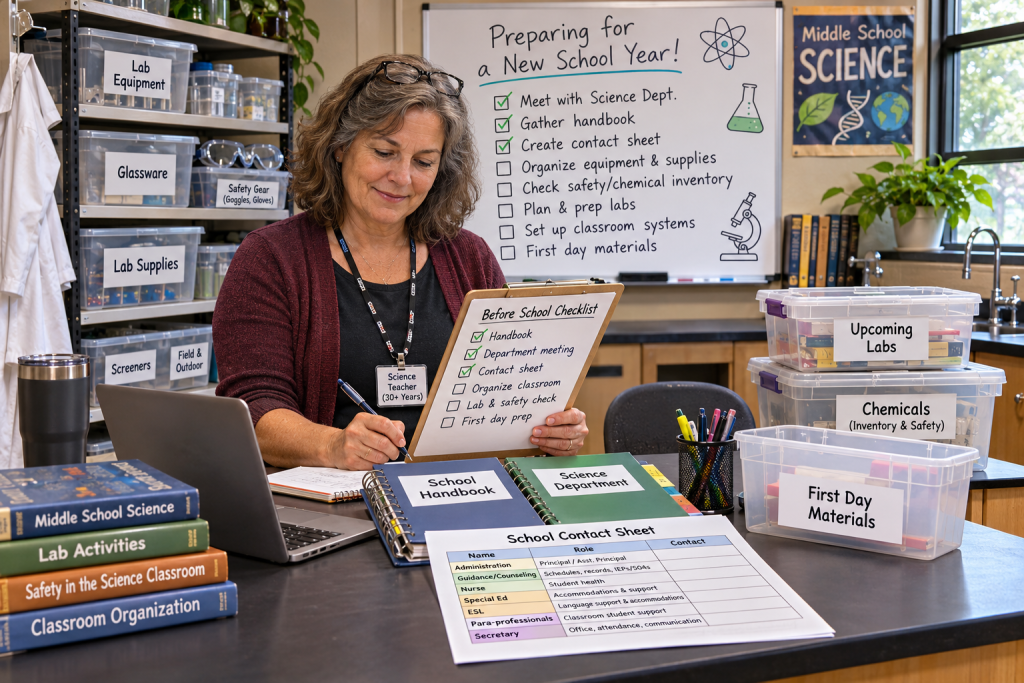
Preparing before the year starts sets you up for the day the students arrive. Why? You will attend many beginning-of-year meetings, and there never seems to be enough time to do all you need to do. So, take steps now to prepare for your first day with students.
Organization in the science classroom: the 10,000-foot view
In thinking about the start of the year, envision your school and community. Let’s dive into these areas to frame up a method to stay organized. We’ll start from the 10,000-foot view.
School: As a whole, the building administration, guidance counselor’s office, nurse, special education services, and English as a second language (ESL) staff will all impact your class in some way. Some more than others.
Admin: They will provide you with a student and teacher handbook outlining all of the key areas that apply to each teacher, department, and the school as a whole. As you know, their job is to oversee and maintain the proper running of the school. They, in turn, are managed by central office staff for your school district.
Guidance/Counseling Office: These individuals create student schedules, file student records & grades, develop IEPs & 504s, and work with students to resolve issues.
Nurse: Self-explanatory
Special Ed services: They provide help for students in their caseloads. You will more than likely have several students from their service. They provide you with the accommodations for each child you teach. These guidelines help you maximize their learning.
ESL: As with Special Ed, they too will give you a snapshot of the students you will be teaching. These accommodations help you maximize these students’ move to fluency. Which will, in turn, assist them in maximizing their learning potential.
Others include para-professionals (who assist teachers with students), secretaries (the real backbone of the school… IMHO), cafeteria workers…
Knowing who handles what saves you time. Before school starts, make a one-page contact sheet listing each person, their role, and the best way to reach them. When a question comes up about a schedule, an accommodation, or a student’s health, you’ll know exactly where to go instead of searching for answers while a class waits.
1,000-foot view
You will have a department and/or team to work with. This post will focus on the science discipline. You may or may not teach different grade levels or courses. Regardless, your department and team are vital sources of knowledge. Use them. Even if you have taught for X number of years, when you start new at a school, these individuals “know the ropes.” Ask them where supplies are kept, how labs are scheduled, and what has worked in past years. Their answers will save you weeks of trial and error.
10-foot view
The 10-foot view, that’s you and your classroom, is covered in the next post(s).
Putting organization in the science classroom into practice
Start small. Before the year begins, gather your handbook, meet your department, and build that contact sheet. These first steps give you the framework for everything that follows. In Part 2, we move from the big picture to your own four walls and look at the systems that keep your room running.
NOTE: Your situation may vary a bit depending on geographical location, grade level, or school type. I understand. For example, you may have a headmaster and not a principal.
(Background: I have taught in 7 different public school settings, 1 private, 1 parochial, and a home-school group.)
Read more in Part 2 of Organization in the Science Classroom.
Related links
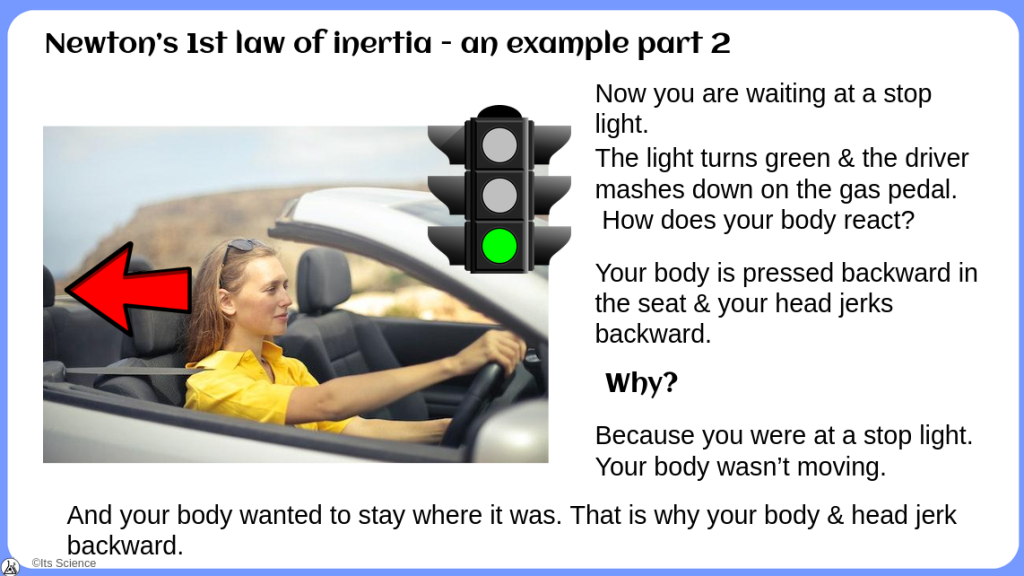
Cross one thing off your back-to-school list. Beginning-of-year meetings leave little time to prep, so start with a lesson that’s already done. Grab my free animated Newton’s Laws of Motion slide presentation, ready to teach as is. Get the free presentation →
Looking for ready-made student pages? My Visual Science Workbook Series is on Amazon, with no-prep pages your students can use right away. Browse the workbooks →