Why is a middle school science teacher talking about science in the elementary grades?” you ask.
One thing I know most middle school science teachers appreciate (besides having kids come in reading on grade level and being able to write well) is having upcoming elementary students enter with a background and interest in science. They have a science focus.
It starts with science in the elementary grades
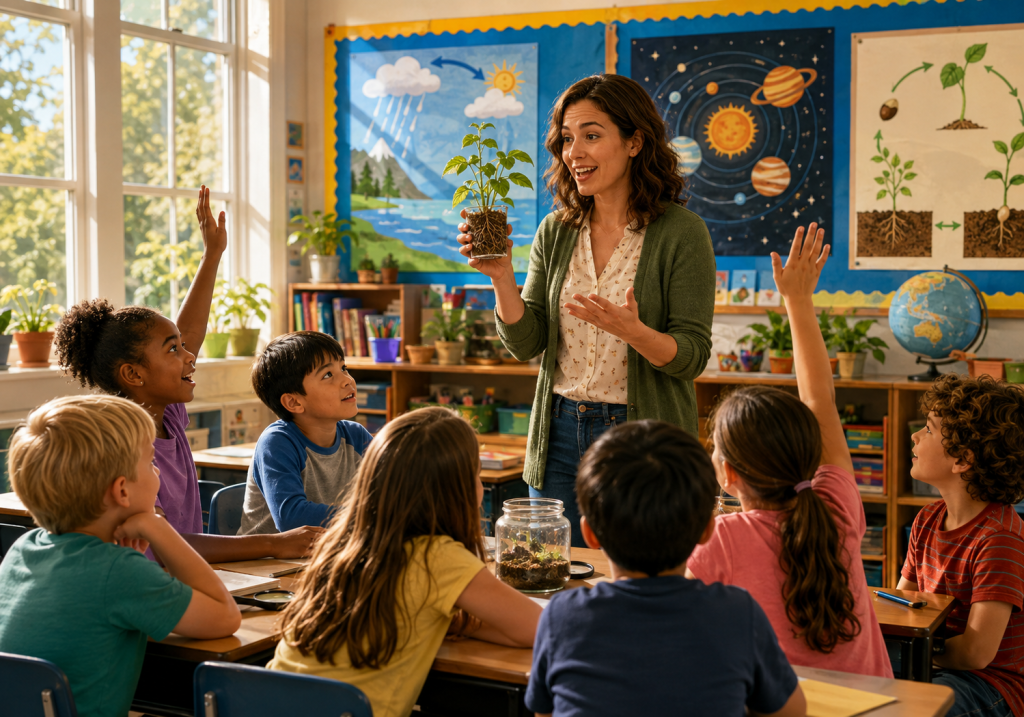
Hats off to elementary teachers who make science a regular part of their curriculum. I know it’s not easy, as they are the backbone for making sure students have the fundamentals down with reading, writing, and arithmetic. And some teachers don’t feel comfortable teaching science, let alone each day.
To be truthful, I have never had to teach the same students in every subject area every day. The only experience I have had doing that was teaching my grandson (4th grade) during the COVID lockdown period. We covered science (naturally), history, English, and math.
I know in some schools the upper elementary teachers tend to rotate students between teachers. This is good practice for their journey into middle school. In most middle schools, that pattern holds for sixth grade. Seventh grade makes a few changes to prepare them for eighth grade. And eighth grade, in turn, prepares them for the transition to high school.
Now, with state and national standards, every grade level has certain expectations in each subject area. That means science K-12!
NGSS was adopted in 20 states & DC. Virginia has its SOLs, Texas has the TEKS, and a slew of other states contributed to the making of NGSS.
Why science in the elementary grades?
One article gave 3 reasons for teaching science in the early grades:
- Students have a natural curiosity for observing and thinking about nature
- It develops a scientific thinking process that can be transferred to other areas of study
- helps target “achievement gaps”
The first point is obvious for any parent. Children have a natural curiosity and interest in what is around them. All the more reason to foster this wonder, make it grow, and see it transfer to later grades.
A process of scientific thinking is valuable, not only in school from year to year but also later in life. Being able to look at a problem, reason out possible solutions, and make intelligent decisions is a great asset. Everyone can benefit from this. And, this way of thinking applies to many arenas, from buying or shopping to world events.
The final point encompasses the lack of persons pursuing science career choices. Granted, science spans all career choices*, but this point is aimed at students entering science and engineering fields of study. As you are undoubtedly aware, there is a lack of students entering those fields. Many more could have or would have had they had good, exciting science instruction throughout their schooling. Teachers looking for ideas, lessons, and activities to support science learning can explore these digital science resources for upper-elementary and middle-school classrooms.
Wrap up
Science teachers all need to help and to be helped by others. From the lower grades to middle school and high school, science needs strong support at every level. Explore these science teaching resources for upper elementary and middle school teachers for additional lessons, activities, and classroom materials.
How are you helping, and who is helping you?
*Past students have told me they wouldn’t use science for what they wanted to do. You know the old student comeback, “When will we ever use this in real life?”
_“Hairstylist?” I’d say. “Don’t they use chemistry when dealing with bleaching or coloring hair? Don’t they have to know something about what they are using to do it successfully and well? And Mechanics? Doesn’t a lot of that deal with physics?” I would go on and on. _
_Of course, to make it relevant to them on that day, I would also talk about skateboarding, bicycling, basketball, football (any sport), video games, brushing teeth, cellphones, deodorant… It’s all science. _I’d dare them to think of something they liked to do that didn’t involve science!
In sum, when you start early in a child’s education by implementing science in the elementary grades, you help them throughout their educational journey
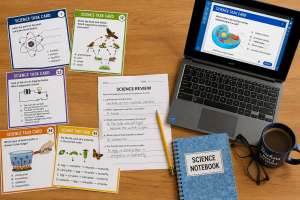
Looking for ready-to-use lessons, labs, activities, and classroom materials? Browse our digital science resources for upper-elementary and middle-school teachers.
Make lab day a success…for you and the kids with this free guide!