The 10-foot view (aka the classroom overview)
The key to success in organizing your science classroom is to have a classroom organization system, use it, and use it often. It must become second nature.
Outside in
-organizing documents that come to you from other departments-
Let’s begin with student documents from Special Ed, ESL, guidance, etc. (i.e., the IEPs, 504s, ESL…) To keep these documents organized, you might use (1) organized in file folders (2) a ring binder with separate tabs for each area (3) electronic copies stored on your computer or the cloud. Regardless, you should order them alphabetically or by class period and keep them handy for quick reference.
The methods above will also work with state standards, pacing guides, and lesson plans.
Inside out
-your personal organization-
Now on to your personal classroom organization system. To do that, you will need to keep track of several things. Below is a list of questions to get you started. Suggestions are in parentheses.
What means will you use to:
- collect student work? (bins, pockets, trays…)
- store work for absent students? (bins, pockets, trays, folders…)
- keep track of school emails? (set up folders for storing emails and periodically purge the unnecessary ones)
- Log parent contacts? (notebook, computer spreadsheet…)
- Organize present, past, and future lesson units? (bins, cabinets, ring binder, computer… keeping a few hard copies on hand is significant)
Storage Wars
Does your classroom have storage for school and science supplies?
Depending on the classroom, there may be little to no storage or ample cabinet space.
Little storage? Bins, totes, and bookshelves… are good ways to store your necessities.
Do YOU have cabinet space and lab storage? Sweet!
More on equipment storage in the next post.
Over and Over and Over and Over
Again, I reiterate: have a classroom organization system, use the system, and use it often until it becomes second nature.
Mapping out your science classroom online
Creating an online map of your classroom is not hard. There are many apps available. Looking over the many choices, I found a few that were relatively easy to work with.
Of course, you can always use these: Google Draw, LibreOffice Draw, PowerPoint, LibreOffice Impress, plus a host of others. Unlike the above, you will have to create your own shapes for desks, chairs, tables, and filing cabinets.
Wrap Up: Your Classroom Organization System
In wrapping up, getting your classroom organized boils down to having a reliable classroom organization system and sticking to it regularly. Whether you’re handling outside documents like IEPs or managing your stuff, the key is to set up a system that works for you and make it a habit.
From sorting student work to keeping track of parent contacts and creating an online map of your classroom, there are different ways to do it, but the important thing is to stick with what works for you.
Whether you go for file folders, binders, or digital storage, the main idea is to practice and repeat until it becomes second nature.
So, as you explore storage options and think about mapping your classroom online, remember that success comes not just from finding the right tools. With the right tools, your classroom organization system will be easy.
Read more in Part 3 of Organization in the Science Classroom
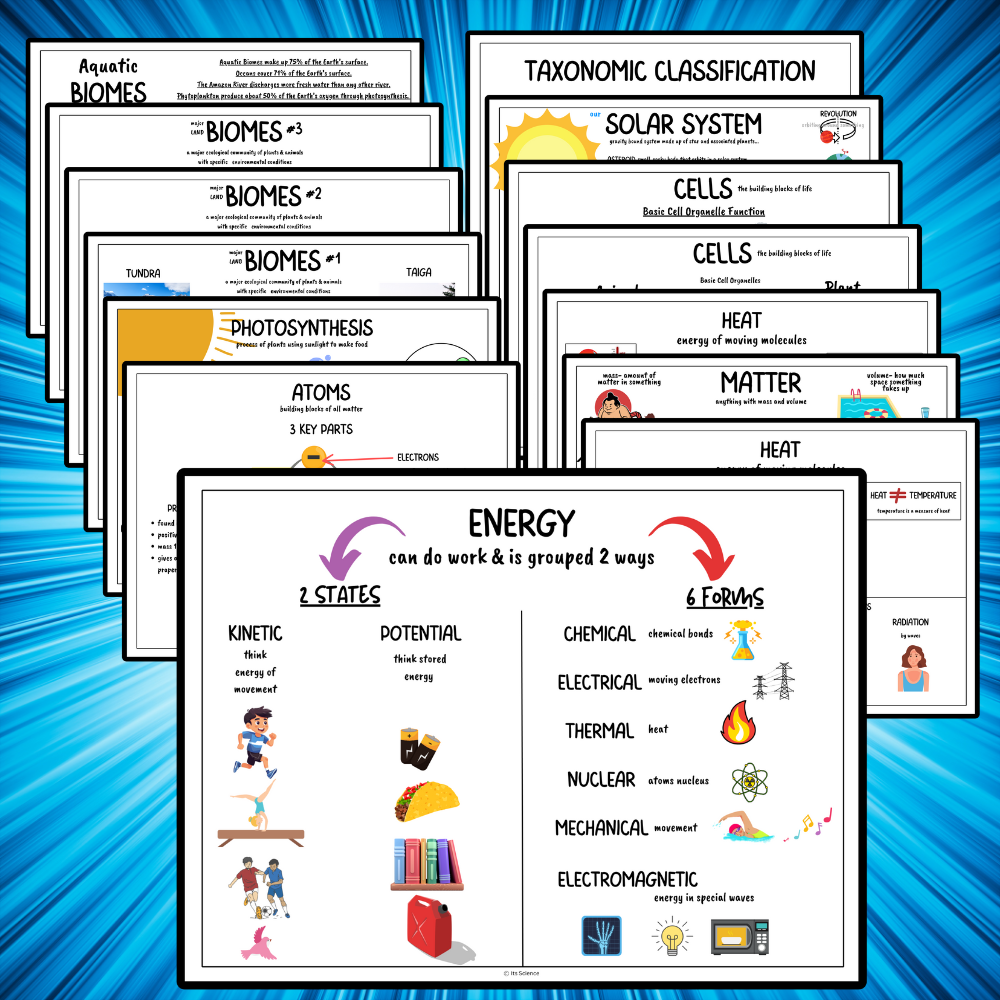
Give your freshly organized walls a job. Your system is in place, so now put the space to work. Grab my free set of 14 science concept posters, including multiple posters on cells and biomes, plus photosynthesis, heat, matter, energy, the periodic table, atoms, taxonomic classification, and the solar system. Download the free posters →